
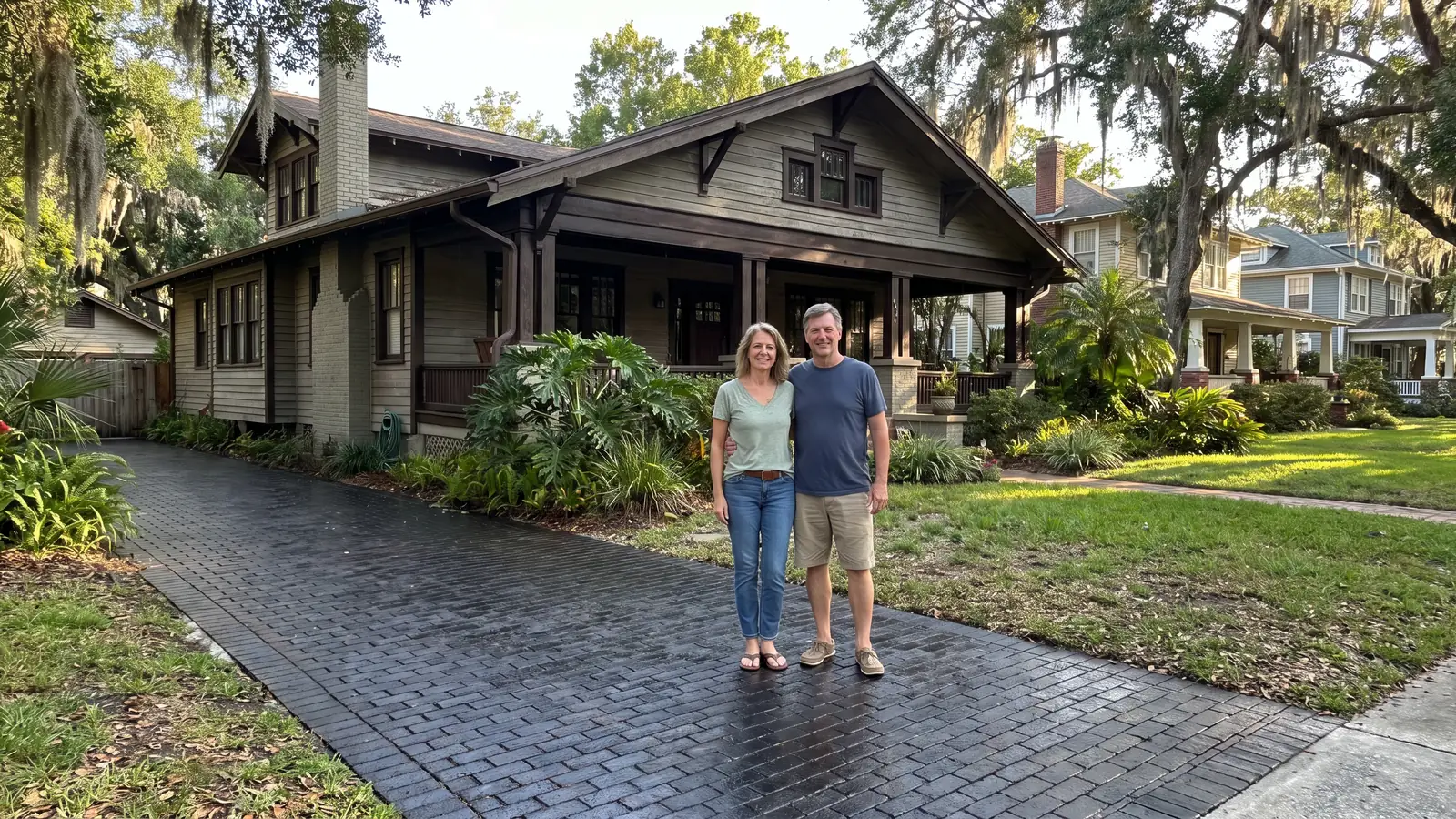
Paver sealing for Arlington Hills homes
Paver Sealing in Arlington Hills, FL
Arlington Hills drives, walks and patios near Blue Cypress Park: call (904) 543-3876 for a free paver sealing quote.
- Brings out deeper paver color
- Fresh joint sand helps lock pavers in place
- Gives weeds less room to grow
- Makes the surface easier to keep clean
- Free estimate, no obligation
Request a Free Estimate
Free, no obligation.
Fast, careful paver sealing in Arlington Hills
Paver sealing is available in Arlington Hills, from the short drives off Cesery Boulevard to patios backing onto the quiet streets nearby. A local contractor washes, re-sands and seals your pavers, and the estimate is free. Once you call (904) 543-3876, the reply should come within 1 business day, usually much sooner.
Smaller lots mean smaller jobs, and a small job should never be treated as an afterthought. A front walk with weedy joints and a back patio gone gray can be done together, in one visit, at the published rate. To describe what you have, book a free estimate and mention roughly how many square feet of pavers there are.
Why hire a local paver sealing contractor in Arlington Hills?
Arlington Hills homes were built over four decades, so the pavers and the coats on them vary from house to house. A local contractor reads each one fresh, and you can book a free estimate to start.
Small jobs welcome
A walk, a stoop or a back patio can be quoted on its own. Ask the contractor about combining areas into one visit.
Free estimate, no obligation
Show the contractor your drive, walk or patio and get a price in return. Whether to proceed is entirely up to you.
A range to hold bids against
Posted rates for a full job are $1.75 to $3.25 per square foot to clean, sand and seal. Measure any quote by it.
Finish and timing are yours
Pick matte or a wet look, then pick the day. Nothing goes on the calendar until you say so.
Get Your Free Estimate in Arlington Hills
Tell us about your pavers in Arlington Hills.
Free, no obligation
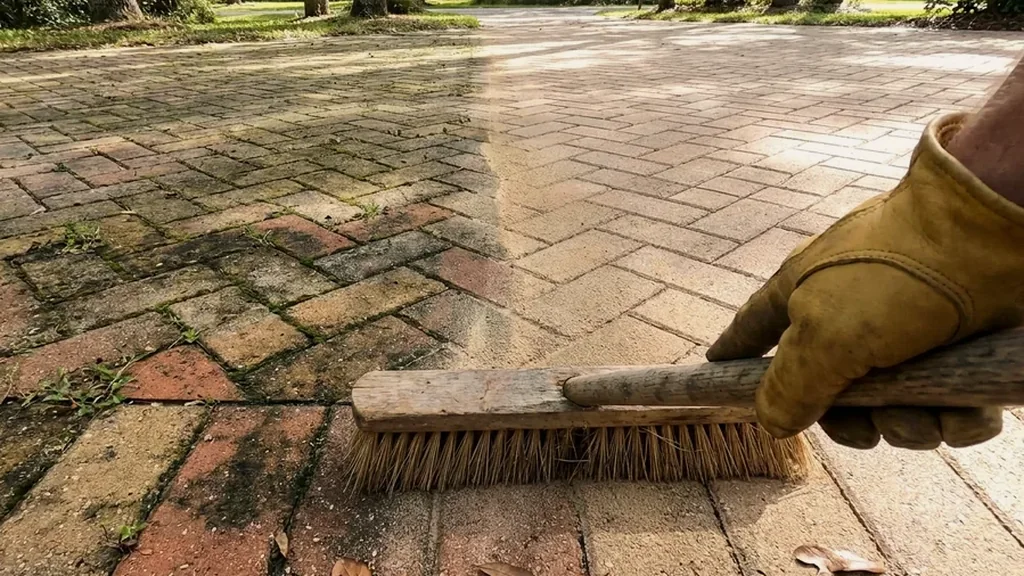
What paver problems show up most in Arlington Hills?
Small patios and short drives
The homes in Arlington Hills run from about 925 to 2,350 square feet, so many paver areas are modest. A Jacksonville cost guide says smaller projects generally cost more per square foot because prep time does not shrink with the surface. A Southside paver site adds that small patios can run into a company's minimum job size. Bundling the walk, the stoop and the patio is the practical answer, since one setup then covers every surface. Ask the contractor to price each area on its own line as well.
Pavers added in different decades
Arlington Hills dates to 1954, and its homes were built from 1951 to 1990. A set of pavers might have gone in at any point since, with whatever sealer the owner of that day picked. One Jacksonville company says older pavers can carry old failing sealer that needs stripping. Water-based sealer cannot go over solvent-based, which is why the old coat has to be identified first. A small test spot can show how the surface takes water and whether anything is left on top. The quote should name the old product if it can be identified.
Fast-draining sand under the base
The USDA describes the Ortega soil series, first described in Duval County, as moderately well drained fine sand more than 80 inches deep. Water moves through it fast. That is county-level, but it fits the sandy ground across the area. Rain moves through it fast and can carry joint sand along. Lost sand widens joints and lets soil in, which supports weeds, so the sand has to be replaced. Rain in Jacksonville averages about 52 inches a year, mostly from May to September, often in short, hard storms.
River air and shade that hold moisture
Arlington Hills reaches toward the St. Johns, where Arlington Lions Club Park and the Blue Cypress boardwalk sit on the water. The river from downtown to Mayport is estuarine and gets saltier past downtown, and storms can push ocean water upriver. Humid air slows drying, and a shaded patio may stay damp for a day or more. The Royal Horticultural Society says algae grow faster in shady, damp spots, so tree-covered patios turn green first. Cleaning clears the film, and sealing makes it harder to grip again, so the green comes back more slowly.
Weeds that keep coming back
Weeds in paver joints usually mean the joints have opened up. A landscape trade article says topping up low sand and sealing the joint sand are the usual defenses, and that sealing discourages ants as well. Pulling weeds without fixing the joints means they return. A new coat over fresh sand gives them less to grow in. Keep in mind that a hard wash can also strip sand, so the order of work matters.
How is paver work in Arlington Hills different from the rest of Arlington?
Arlington Hills is a compact piece of Arlington dating to 1954. Jobs here are often a driveway, a walk and a back patio rather than acres of pavers. One neighborhood page puts its homes between 1951 and 1990, from 925 to 2,350 square feet. That mix shapes the quote, so give your rough square footage when you book a free estimate.
Cesery Boulevard runs through the area, and the Census places an address on it in ZIP 32277, one of Arlington's three ZIP codes. The St. Johns River edge, with Arlington Lions Club Park and Blue Cypress Park, sits a short drive away. Use those landmarks to describe your street when you call (904) 543-3876.
Associations vary street by street in Arlington Hills, so check before you choose a finish. Your declaration, if you have one, controls what an association may review. A short written question to the board can settle a finish choice. Once you know the rules, book a free estimate and the contractor will work within them.
What does paver sealing cost in Arlington Hills?
Rates posted by local companies run $1.75 to $3.25 per square foot to clean, sand and seal. A small lot keeps the total modest, though a minimum job size can lift the cost per foot. Failed old sealer adds a stripping step. To see how your area prices out, book a free estimate.
Quotes move with the surface, not only the size. Heavy shade means more cleaning, lost sand means more refilling, and a lifted section needs a repair before any coat. Joining the front walk and the back patio into one visit can spread out the setup time. Call (904) 543-3876 and the contractor can tell you which of these fit your house.
| Paved area | Typical example | Clean, sand and seal |
|---|---|---|
| 300 sq ft | Small patio or walkway | $525 to $975 |
| 600 sq ft | Two car driveway | $1,050 to $1,950 |
| 1,000 sq ft | Large driveway or pool deck | $1,750 to $3,250 |
| 1,500 sq ft | Driveway plus pool deck | $2,625 to $4,875 |
Math based on the $1.75 to $3.25 per square foot that Northeast Florida paver companies publish. Your contractor sets the actual price after seeing the surface. Repairs, leveling and stripping failed sealer are usually extra.
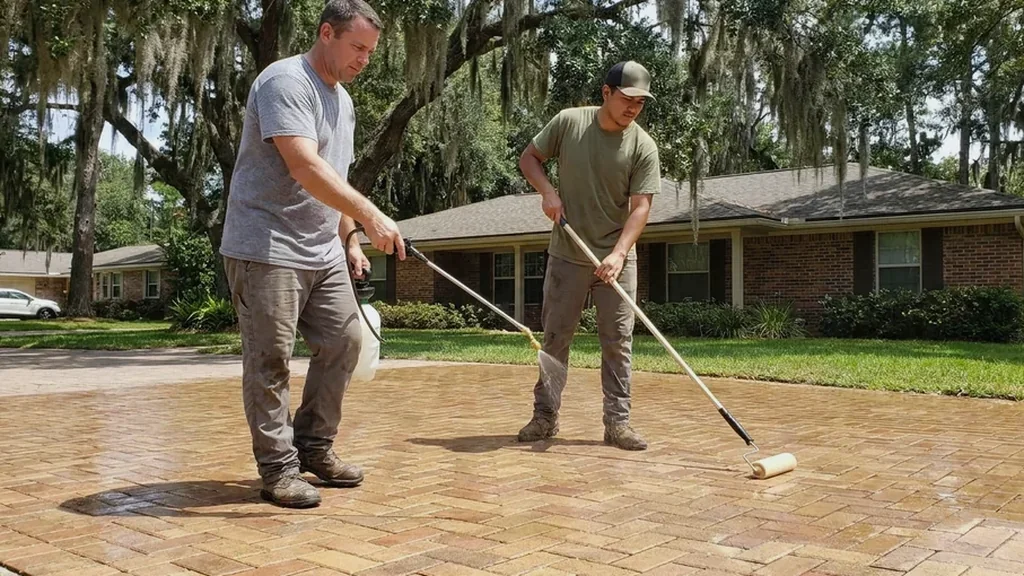
How does a paver sealing job work in Arlington Hills?
Measure each area separately
The contractor walks your Arlington Hills lot and measures the drive, the front walk, the stoop and any back patio one by one. Listing small areas apart shows what each costs. The surface is checked for dips and old sealer. Since sealing locks in what is there, a sunken spot gets reset first, and any lifted edge is noted. The contractor also asks which area you use most, so the schedule fits your week.
Wash off shade and stains
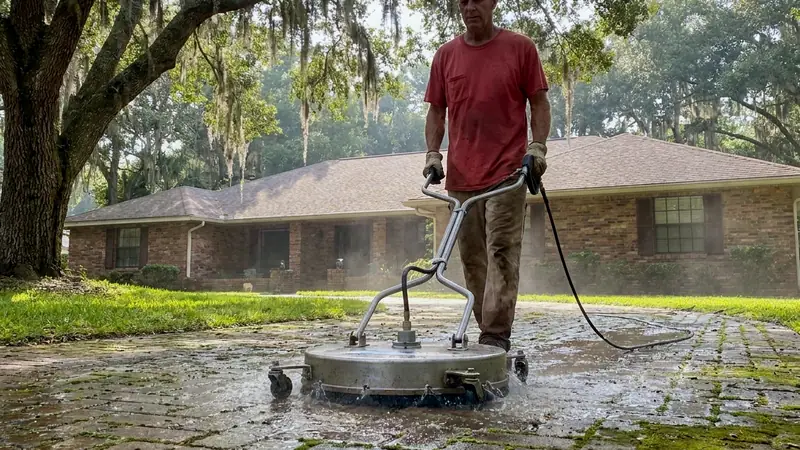
Next comes the wash, which lifts green film, dirt and tire marks. Oil and rust get a pre-treatment, and a few deep stains may lighten without fully leaving. Hard pressure can loosen joints, so a careful contractor keeps it moderate. Rinse water stays off door frames, siding and the plants beside the pavers. If a stain resists, you are told before sealing, not after.
Sand the joints back in
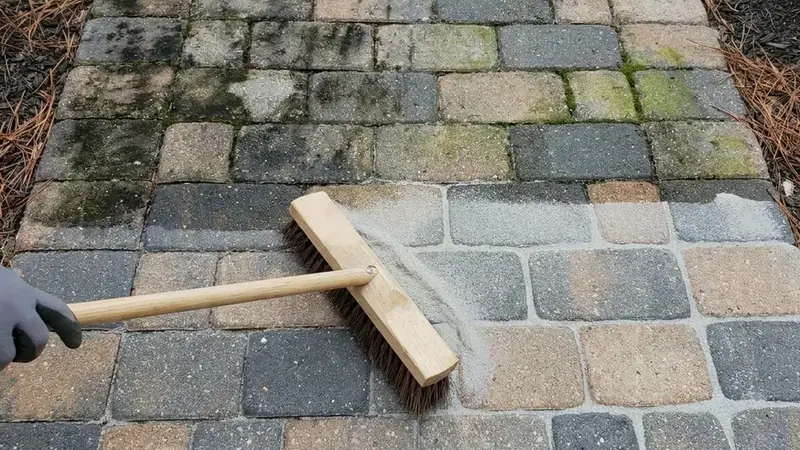
Washing sweeps out joint sand, so fresh silica sand is brushed in until the joints are full. Arlington Hills sits on sandy ground that drains fast, and a low joint lets soil settle in. Full joints hold the pavers firmly and leave weeds little space to start. Colored sand is an option some Jacksonville companies offer. A low joint along the edge of a walk is checked twice, since that is where sand escapes first.
Give the pavers a day or two
Pavers have to be dry first. A Jacksonville page calls for 24 to 48 hours after cleaning, and river humidity and shade stretch that wait. Sealing damp pavers is the usual cause of white, cloudy results. Expect the contractor to watch the forecast and perhaps shift your date by a day.
Seal it and keep the note
A sprayed coat is back-rolled into the joints. Matte keeps the natural look, while a wet look deepens color and shows wear in drive lanes. A few hours later it can take foot traffic, and a day later it can take cars. Ask for the product name, and keep it with the date, since companies commonly quote two to five years between coats. A fresh coat should be left alone for the full day, so plan where cars will park.
Complete paver services in Arlington Hills
Four steps in order: wash, new sand, dry time, sealer. Smaller Arlington Hills jobs often fit into one visit once the pavers are dry. Sealer goes last, so no dirt hides beneath it. Call (904) 543-3876 to ask how long your walk, stoop and patio might take together.
Front walks and stoops get the most footsteps, so they scuff first. Short driveways take tires in the same few lanes. Back patios under trees collect leaves and green film. Tell the contractor which areas you want done when you book a free estimate, and each gets its own line in the estimate.
A film-forming sealer sits on top and stabilizes the joint sand, while a penetrating sealer soaks in and leaves the look unchanged. Film-formers in high-traffic areas may need recoating every two to three years, by one supplier's guide. Call (904) 543-3876 to talk about which type suits a drive, a walk or a patio.
Late spring through summer brings hard, short storms, and the driest stretch runs from November through April. A run of dry days matters, since sealer needs a dry surface. Shaded patios can need an extra day. To find a date for your Arlington Hills pavers, book a free estimate.
Questions to ask before you hire
- Can you clean and seal brick pavers that have been in the ground for decades?
- How often should I rinse a sealed driveway so the finish stays even?
- What does the price cover if I only want the front walkway done?
- Is the sealer safe around my dog and the pond by the patio?
- How do you confirm the pavers are dry all the way down before you apply sealer?
- Will you show me photos of any stain that will not come out?
- Do you add grit to the sealer on steps and ramps?
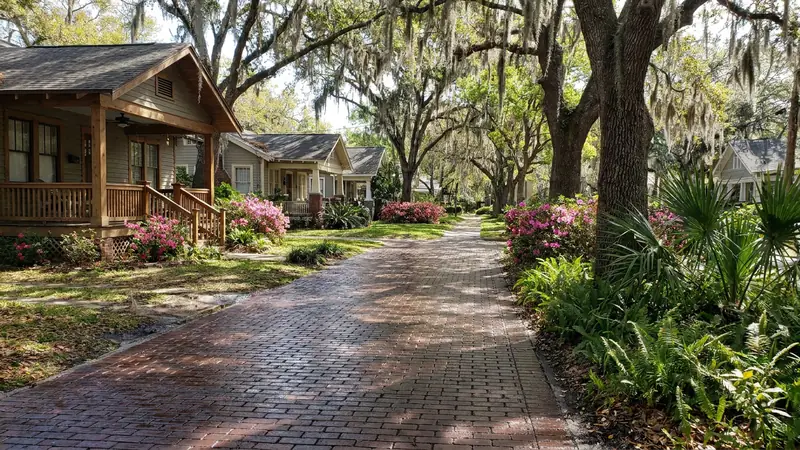
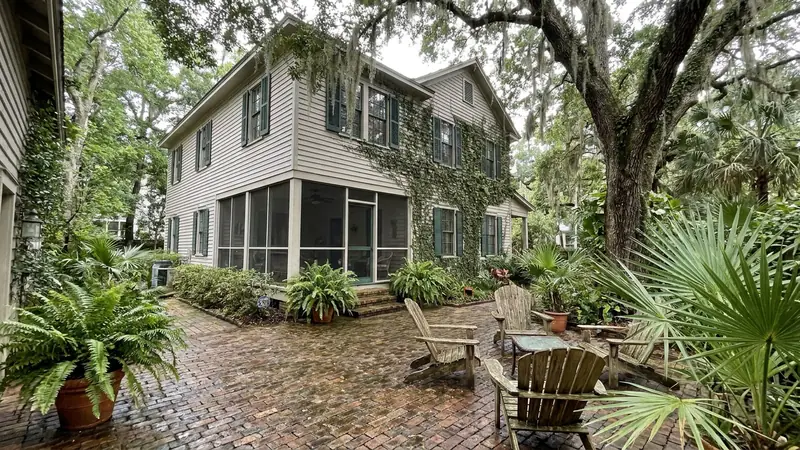
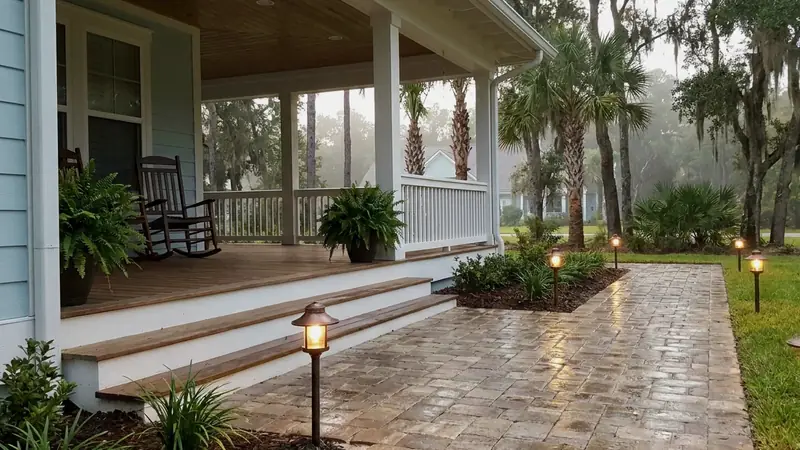
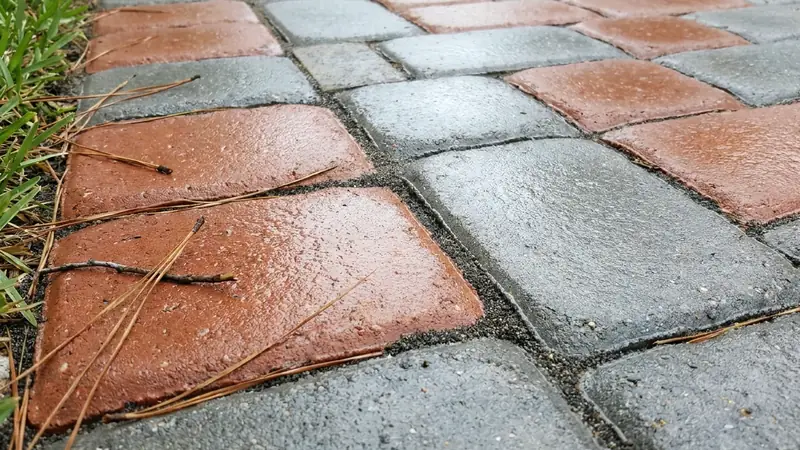
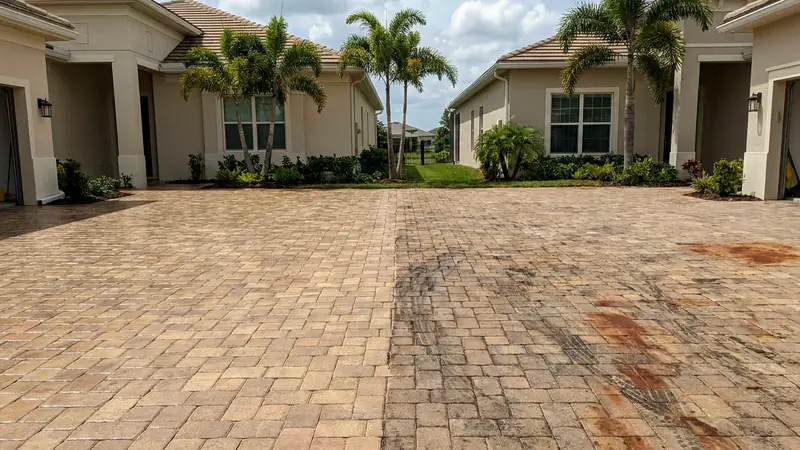
What do sealed pavers look like around Arlington Hills?
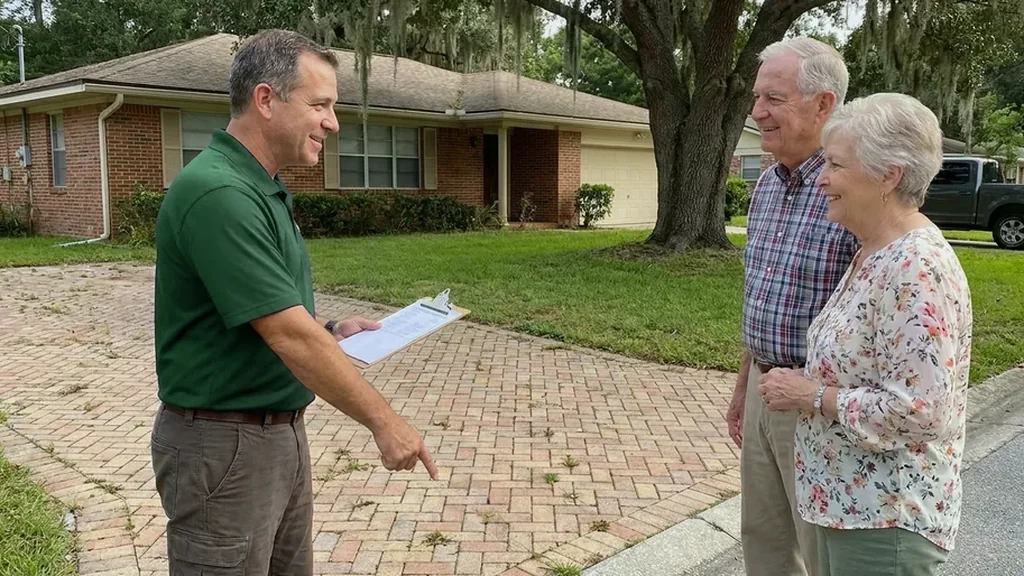
Why local matters in Arlington Hills
A contractor who works Arlington Hills knows the homes span from the early 1950s to 1990. That range means a wide mix of paver ages and earlier coats, and each has to be identified before anything new goes on. Someone unfamiliar with the area may assume too much. If you want a contractor who knows these streets near the river, call (904) 543-3876.
Smaller properties call for neat work, with tight rinse control near doors, planters and neighbors' fences. A local contractor expects short drives and close lot lines. That shapes how gear is set up and where the water goes. If you have a tight side yard or a narrow walk, book a free estimate and say so.
River humidity changes the schedule near the St. Johns. Mornings that feel dry may still hold moisture in shaded joints, and sealing over it can cloud the coat. Local contractors plan for that with patience on the day. You can book a free estimate and ask how a window would be chosen for your street.
Who built Arlington Hills, and how old are its pavers likely to be?
Most pavers here were probably added after the homes, since the neighborhood dates to 1954. The developer behind Terry Parker High School began buying Arlington land around 1943 and owned 1,800 acres by 1959. He donated thirty acres for the school in 1955. If your pavers came with a later renovation, book a free estimate.
Two riverfront parks give the area its landmarks. Blue Cypress Park was an 18-hole golf course until the city bought it in 1994, and a fishing dock and boardwalk followed in 2001. Arlington Lions Club Park, finished in phases from 1982 to 1989, is linked to it by a long boardwalk. Near either park, call (904) 543-3876 and name your street.
Frequently Asked Questions
How much is paver sealing per square foot in Arlington Hills?
Published rates for a full clean, sand and seal run $1.75 to $3.25 per square foot. Where an Arlington Hills job lands depends on shade, old sealer and lost sand. A small area may hit a minimum job size, which raises the cost per foot. Ask for the measured area in your quote, and for each area listed on its own line. Include the walk and the stoop in the request so the contractor can quote them together.
Is it good to seal pavers in Arlington Hills?
For most walks, drives and patios here, yes. Sealing keeps joint sand from washing out on this fast-draining ground and slows weeds, stains and fading. The cost is upkeep, since the coat wears and needs renewing. Covered or shaded pavers can wait longer than a sunny drive.
How long do paver sealers last in Arlington Hills?
By company quotes, a coat lasts two to five years. Safe Touch calls two to three years typical, with full sun and pool chlorine on the short side. Try a sprinkle of water on a drive lane: beading means the coat works, and a dark soak-in means it is spent.
What sealer do contractors use on Florida pavers?
The two main kinds are water-based and solvent-based, and most are film-formers that sit on the surface. Penetrating products soak in instead and leave the look as it was. Whatever is on your pavers now limits the choice, because water-based cannot go over solvent-based. Keep the product name on file.
Is there a minimum job size for paver sealing in Arlington Hills?
Some companies have one. A Southside paver site notes that small patios can run into minimum job sizes. Ask about it when you request an estimate, and consider adding the walk and the stoop so the total makes sense. A fair quote lists each area and its square feet, and the contractor can explain how the minimum applies. The contractor can explain how that minimum applies to your lot before you agree.
Can new sealer go over old sealer on my Arlington Hills pavers?
Sometimes, depending on what is down. Water-based will not go over solvent-based, and failed old sealer may have to be stripped. After a few owners the old product can be a mystery, so the contractor tests a small spot. A photo of any old label helps.
Will sealing keep weeds out of my pavers?
It helps, but it works best on filled joints. Weeds root where joints open up and soil collects. Sealing locks in the sand and discourages ants and weeds, according to a landscape trade article. Washing removes old sand, so fresh sand goes in before the coat is applied. A clean, filled joint is what the sealer then locks in. Pulling weeds alone does not fix open joints, so expect the contractor to look at the sand level.
How soon can I drive on pavers after sealing in Arlington Hills?
Expect foot traffic to be fine after a few hours, and cars after about a day. One Jacksonville paver company asks for 2 to 4 hours before walking and 24 hours before driving. Humid river air can stretch both. Your contractor will say when your product has cured enough.
Ready for a Free Estimate in Arlington Hills?
Call (904) 543-3876 and tell us about your pavers.
Free, no obligation