
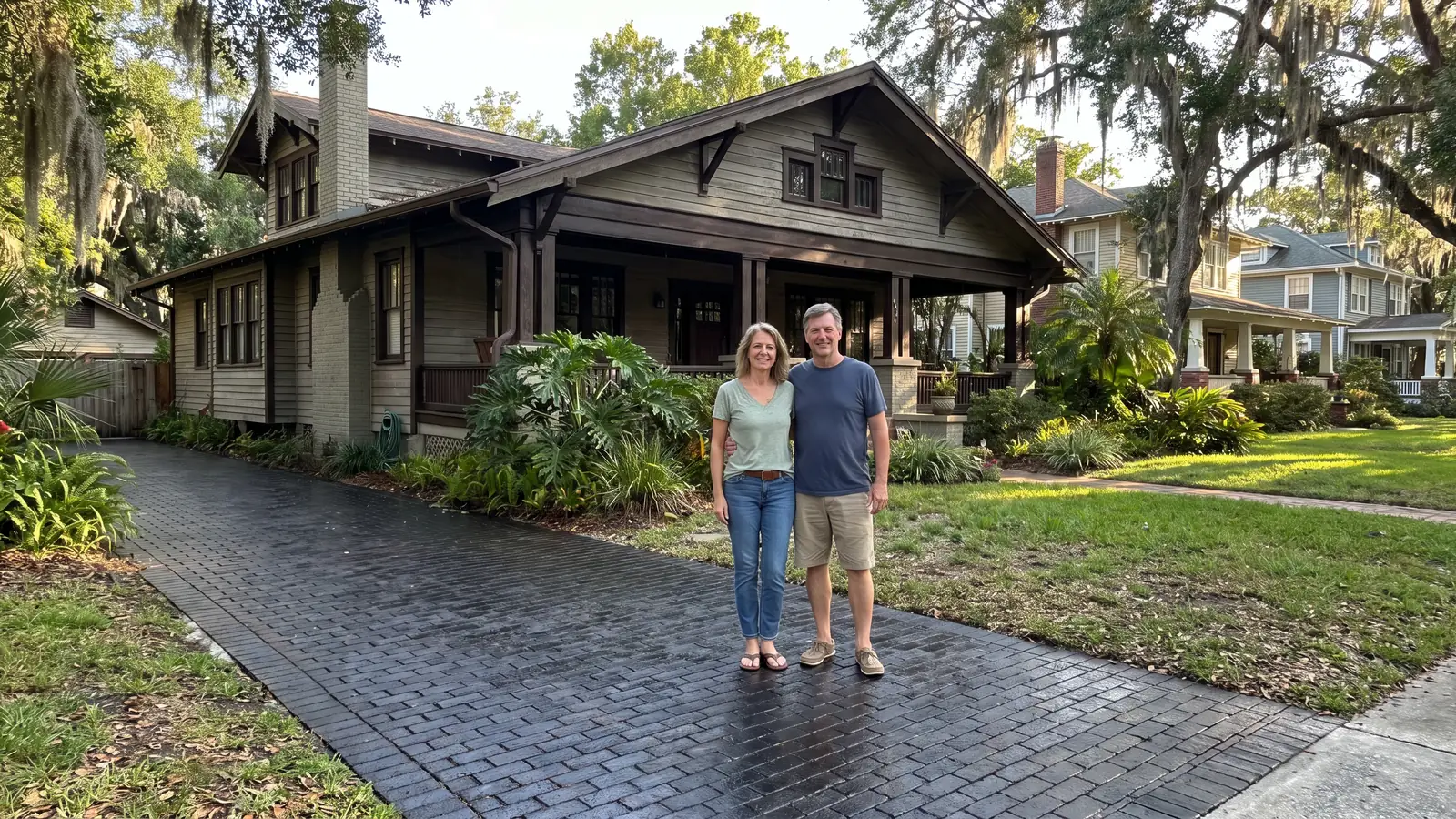
Paver sealing for San Marco homes
Paver Sealing in San Marco, FL
Near Lake Marco's old brick clay pit, call (904) 543-3876 for a free sealing estimate on your San Marco pavers.
- Brings out deeper paver color
- Fresh joint sand helps lock pavers in place
- Gives weeds less room to grow
- Makes the surface easier to keep clean
- Free estimate, no obligation
Request a Free Estimate
Free, no obligation.
Fast, careful paver sealing in San Marco
Paver sealing is available in San Marco, from the brick courtyards around the Square to the oak-lined drives near River Road. A local contractor cleans, re-sands and seals your pavers, and the estimate is free. To start, book a free estimate; a reply comes within 1 business day, usually much sooner.
After a wash, fresh sand and a new coat, the brick or concrete goes back to one even color. Prefer to talk it over first? Call (904) 543-3876 and tell the contractor what the walk looks like.
Why hire a local paver sealing contractor in San Marco?
San Marco homeowners tend to hire a local paver contractor for one reason. Old clay brick and newer concrete often share one lot, and each needs its own sealer. To hear what fits your yard, book a free estimate.
Look at the walk before any quote
The contractor checks your San Marco brick or concrete in person and quotes the job. There is no charge and no obligation to book.
A price you can measure
Northeast Florida companies commonly publish $1.75 to $3.25 per square foot to clean, sand and seal. Compare any San Marco quote to that.
Sealer matched to the surface
Old clay brick and concrete pavers call for different products. Ask which one the contractor plans for each part of your yard.
You make the call
You pick the date and the finish, and you can say no after hearing the number. A San Marco estimate commits you to nothing.
Get Your Free Estimate in San Marco
Tell us about your pavers in San Marco.
Free, no obligation
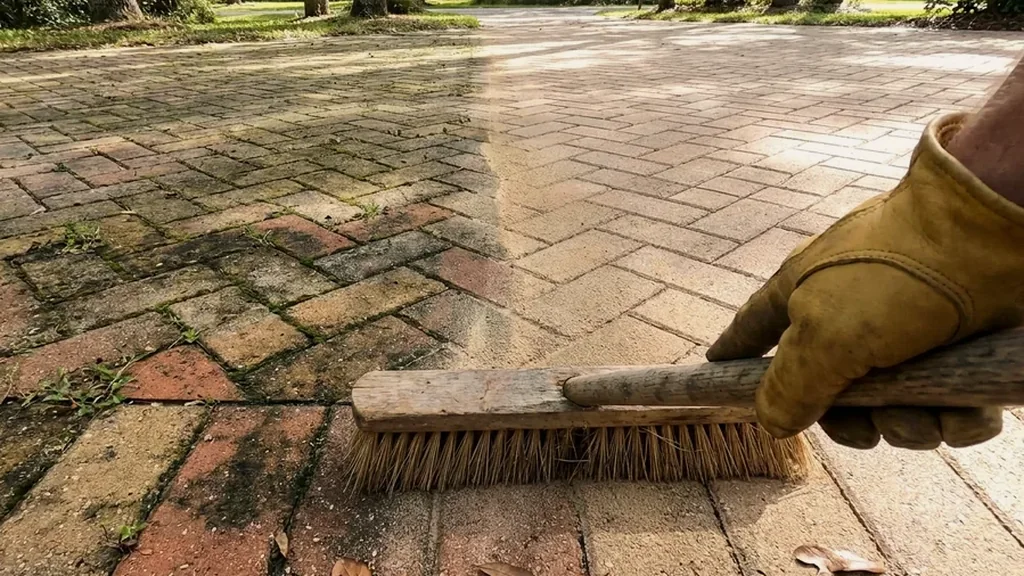
What paver problems show up most in San Marco?
Clay brick that has to breathe
San Marco grew up beside a brickyard. Lake Marco began as a clay pit for the Gamble and Stockton Brick Company. Safe Touch describes the neighborhood as historic brick, tight lots and courtyards. A Northeast Florida paver company says old clay brick usually takes a breathable, penetrating sealer. A thick film can trap moisture and cause flaking and haze. That means the product matters more on a brick walk than on a plain concrete drive. Ask about it before any work is priced.
Brown streaks under oaks and magnolias
Landon Park is shaded by large magnolias and oaks, and Belmonte Park by oaks. The park in River Road's median has live oaks planted in 1985. Safe Touch notes brown water stains on drives and walks beneath a live-oak canopy. If your San Marco drive sits under that kind of cover, expect leaf stain to show first where the branches hang lowest. Sealer keeps the stain from setting in as deep, which means cleanups get easier.
White haze rising through the stone
Brick and natural stone are more porous than concrete, and moisture moving through them can leave chalky white deposits. A brick maker warns that sealant should never go over damp or dirty surfaces or efflorescence. Those conditions get locked in for good. In plain words, a San Marco walk that looks fine when wet can turn cloudy under a coat put on too soon. The fix is patience, not more product.
Sand that leaves with the summer rain
The city averages around 52 inches of rain a year, with the heaviest storms between May and September. A paver company says polymeric sand needs a long dry spell to set and can wash out in one afternoon storm. Open joints let soil in. That means the weeds on your San Marco patio often start as missing sand, and pulling them without refilling the joint only brings them back.
Chlorine splash on pool decks
PaverGuard says pool decks in San Marco see chlorinated splash-out that dries white on the surface. It says decks with chlorine or salt systems often land at 18 to 24 months between seals. A deck beside the pool may need a new coat sooner than a front walk. Tell the contractor which one you are asking about, and mention how the pool is treated.
Does my part of San Marco change how pavers should be sealed?
It can, because San Marco is a patchwork of older and newer ground. The San Marco Preservation Society uses Interstate 95, Philips Highway, Greenridge Road and the river as its edges. Colonial Manor and South Riverside sit inside them, on land that was once Red Bank plantation and was annexed in 1937. Their lots and trees differ from the blocks by the Square, so name your street when you book a free estimate.
Around San Marco Square the lots are tight and the courtyards are small. A Jacksonville paver site warns that a small patio can run into a company's minimum job size. Alexandria Place has a median build year of 1939 on the county roll, so a past owner may have used a product nobody wrote down. Call (904) 543-3876 and say which block you live on.
Some San Marco addresses may fall under local historic rules. The City of Jacksonville requires a Certificate of Appropriateness for exterior work in a local historic district or on a landmark. Driveways are named as an example. The page does not list which neighborhoods are covered, so look up your address on the city's Land Development Map before you book a free estimate.
What does paver sealing cost in San Marco?
Expect a published range of $1.75 to $3.25 per square foot to clean, sand and seal, the figure Northeast Florida companies commonly list. A Northeast Florida paver company says prep such as mildew removal, rust treatment and stripping old film moves a price more than the sealer does. For a free figure on your yard, book a free estimate.
Space also changes the math. San Marco's tight lots and small courtyards leave less area to spread setup cost over, and a Jacksonville cost guide says that is why smaller jobs cost more per square foot. Gates and narrow side yards add prep as well. For a sense of how your lot would be measured, call (904) 543-3876.
| Paved area | Typical example | Clean, sand and seal |
|---|---|---|
| 300 sq ft | Small patio or walkway | $525 to $975 |
| 600 sq ft | Two car driveway | $1,050 to $1,950 |
| 1,000 sq ft | Large driveway or pool deck | $1,750 to $3,250 |
| 1,500 sq ft | Driveway plus pool deck | $2,625 to $4,875 |
Math based on the $1.75 to $3.25 per square foot that Northeast Florida paver companies publish. Your contractor sets the actual price after seeing the surface. Repairs, leveling and stripping failed sealer are usually extra.
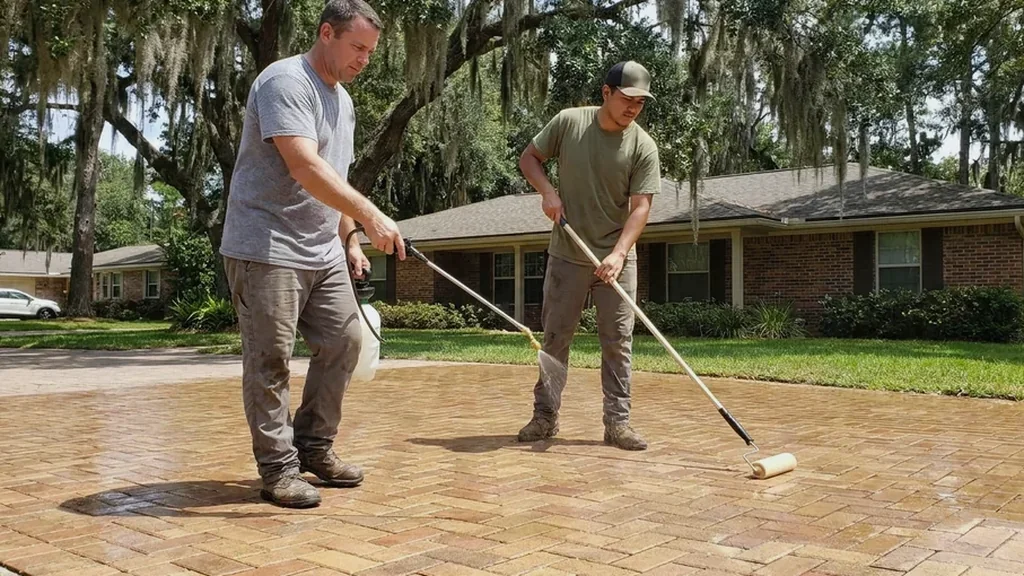
How does a paver sealing job work in San Marco?
Look at brick and concrete separately
The contractor walks your San Marco yard and notes which parts are clay brick and which are concrete. Each gets its own plan, since a yard with both needs two products. Sunken or lifted spots are marked for repair, because sealing preserves any dip it covers. If an old coat is on there, the contractor works out what it is first, since water-based sealer cannot go over solvent-based sealer. Share anything you recall about earlier sealing.
Wash without blasting
Cleaning clears leaf stain, mildew and the green film in damp corners. Past 3,000 PSI, one trade supplier says, standard concrete pavers can lose their surface, so the washer is kept below that. Rinse water is kept away from planting beds and the pool. Old brick gets gentler handling than a new concrete drive, and the whole surface needs time to drain before the next step.
Treat the white haze and refill the joints
Any chalky deposit has to be dealt with before a coat goes on. Washing also pulls out joint sand, so new sand is swept into every joint afterward. Full joints hold the pavers steady, which means fewer weeds next spring. On courtyard brick this step can take longer, since the joints are often narrow. A last sweep clears the extra sand off the faces.
Let the surface dry all the way
One sealer maker wants the surface dry a full 24 hours after cleaning or rain. Summer storms make that harder to find in San Marco, and shady corners dry slowest. A careful contractor waits for the forecast instead of sealing damp brick. If your lot is near Lake Marco or Craig Creek, ask how the low spots are checked. A rushed coat on wet pavers is how cloudy spots begin.
Apply the coat that suits each surface
Brick usually gets a penetrating product that leaves the look alone, while concrete can take a film sealer. Pros spray and then back-roll, and a wet look darkens color more than matte does. A wet look also shows scuffs sooner. Most firms quote a gap of two to five years before recoating. Ask when you can walk on it and when the car can return.
Complete paver services in San Marco
The order of work in San Marco is wash first, then stain treatment, new joint sand, a drying period and finally the coat. Putting the coat last keeps leaf stain and old haze from being sealed in. Skipping a step tends to show up within a season. If you want the timeline for your yard, call (904) 543-3876.
Look at your yard as three kinds of surface. Courtyard brick near the Square soaks up moisture, a drive under oaks collects stains, and a pool deck turns white from splash-out. One coat will not suit all three. When you book a free estimate, list which ones you have.
There are two broad families of sealer. Penetrating products soak into brick and leave its look alone, while film sealers sit on concrete and deepen color. An old solvent-based coat rules out a water-based product on top, so the history of your pavers matters. For help sorting out the family that fits, call (904) 543-3876.
Rain decides the calendar. Most of Jacksonville's wet weather lands between May and September, and a patio under San Marco's magnolias can stay damp for days after a sunny drive has dried. Expect the work to be split across two visits so each surface gets a dry window. To share the dates that suit you, book a free estimate.
Questions to ask before you hire
- Can the job go ahead while I am at the office all day?
- Which finish suits an older, worn surface: matte, satin or wet look?
- Can you work in a narrow driveway or tight side yard without blocking the street?
- Will you show me photos of any stain that will not come out?
- How do you confirm the pavers are dry all the way down before you apply sealer?
- How often should I rinse a sealed driveway so the finish stays even?
- How do you keep green algae from coming back in the shade beside my house?
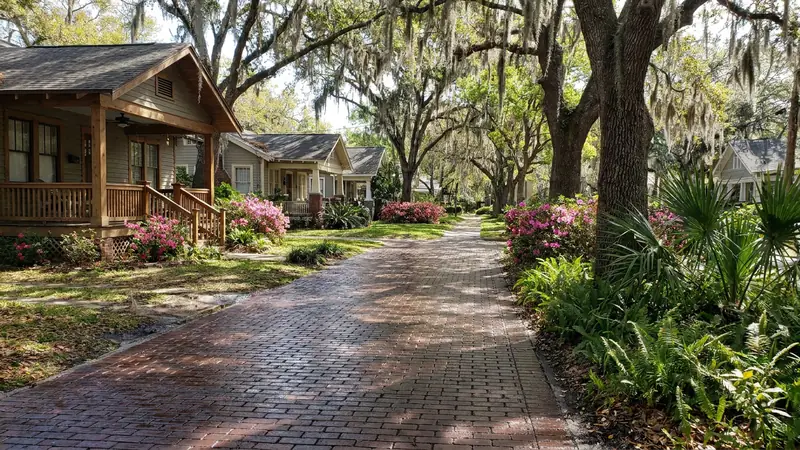
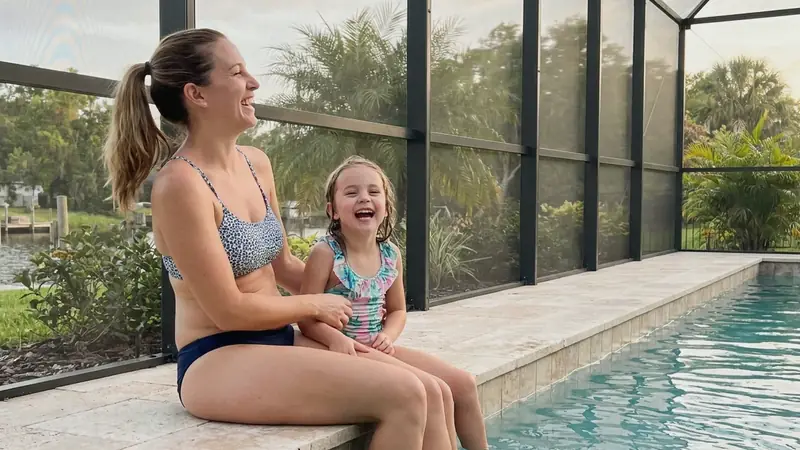
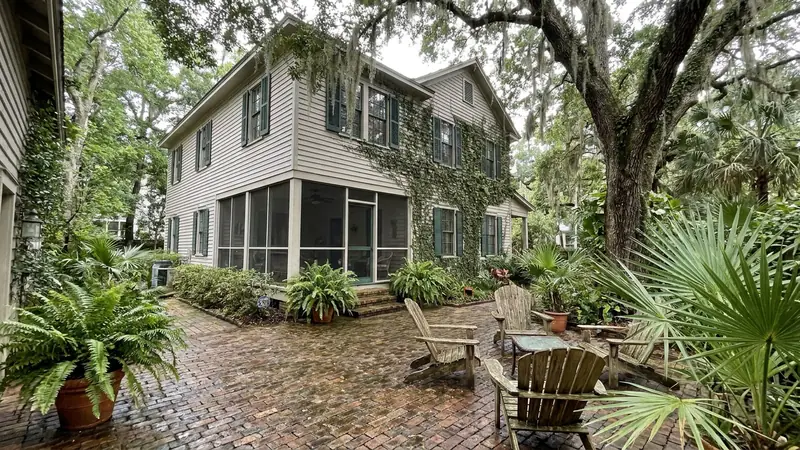
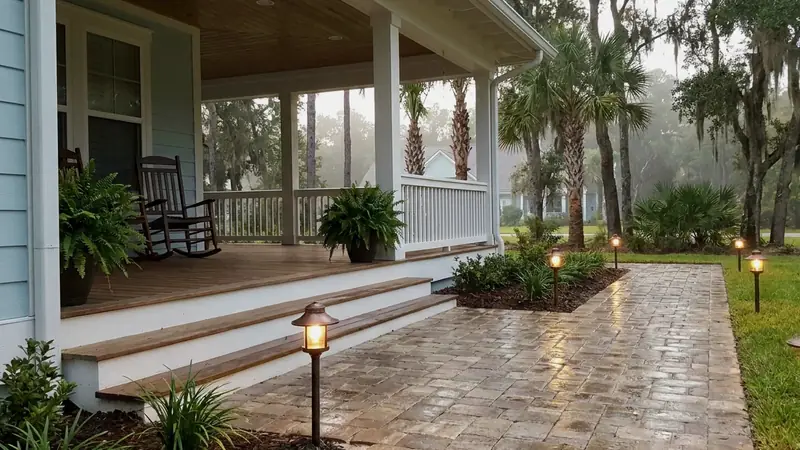
What do sealed pavers look like around San Marco?
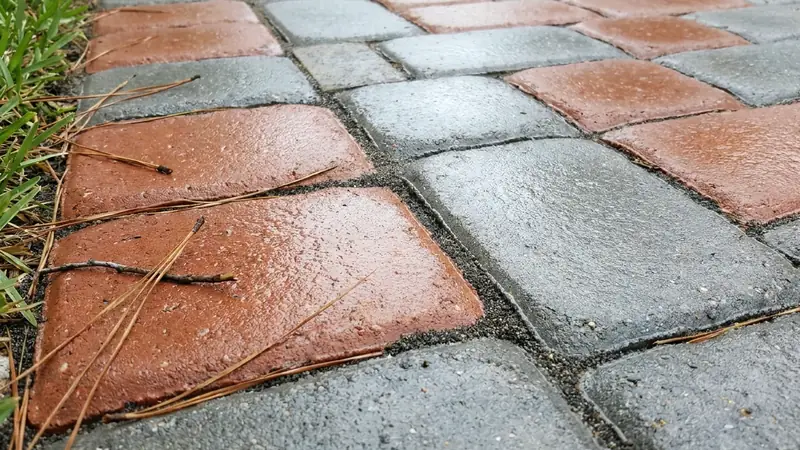
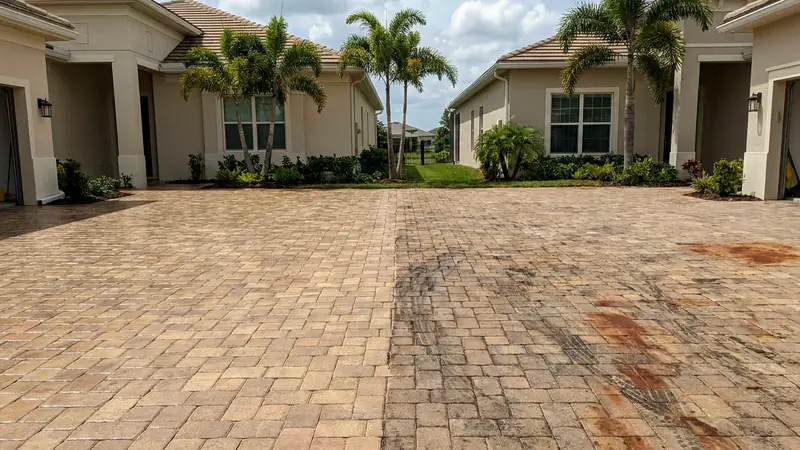
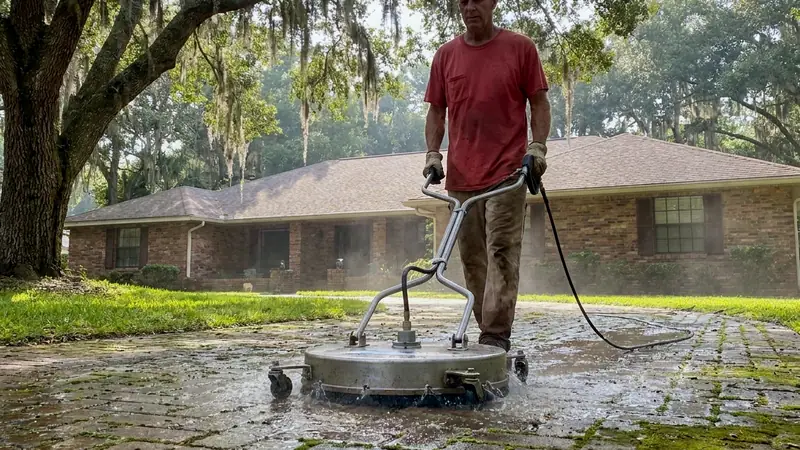
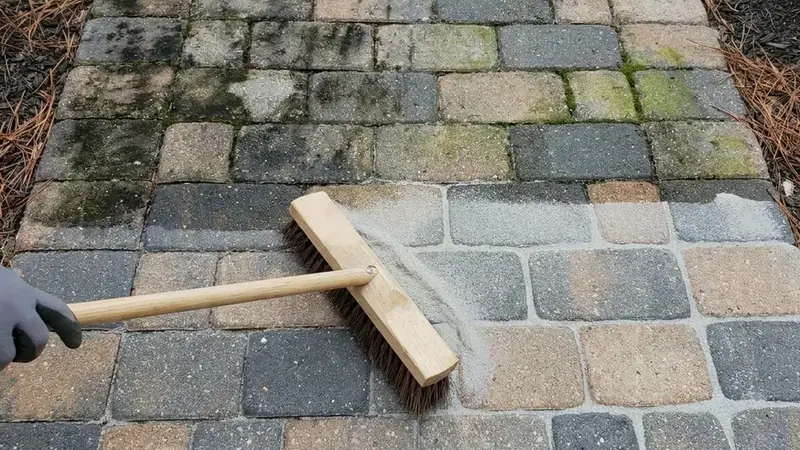
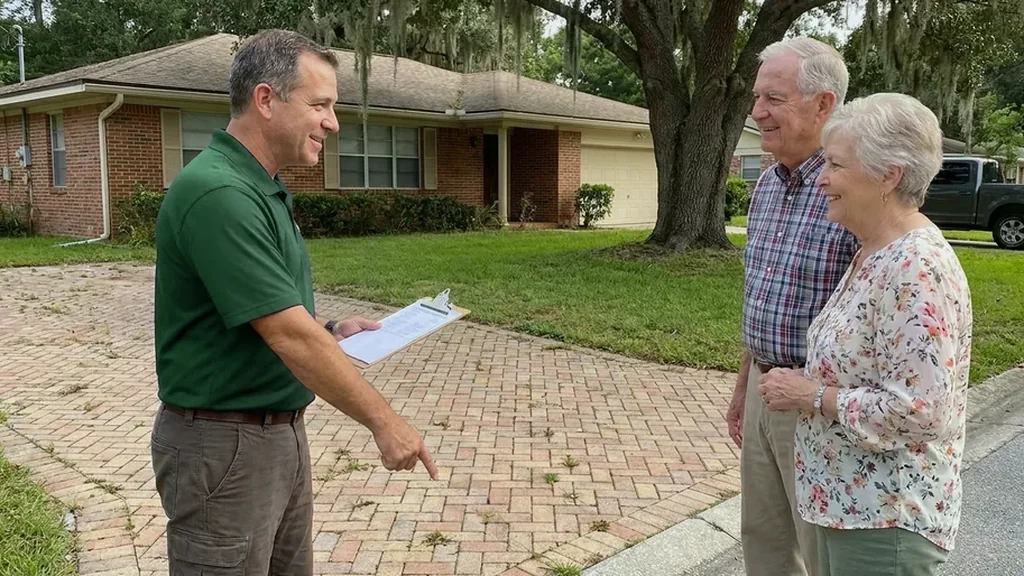
Why local matters in San Marco
San Marco puts clay brick and concrete on the same lot more often than most places. A contractor who works here picks the product for each before the job starts, which means fewer surprises with haze or flaking. Someone from far off may carry one product for every walk. Call (904) 543-3876 to reach a contractor who works south of the river.
Water shapes the jobs here. Tides reach far up the river and run strongest near Jacksonville, and Lake Marco has a canal dug to it. Yards by the lake or Craig Creek may hold moisture longer, so a local contractor checks the low spots first. If your lot sits near either, book a free estimate and say so.
Historic rules are part of life in older neighborhoods. The preservation society formed in 1975 to protect San Marco's historical and architectural character, and the city can require a Certificate of Appropriateness for some exterior work. A contractor who has seen those rules asks early, so no surprise lands after the job is booked. For a quick check on your address, call (904) 543-3876.
What is the story behind San Marco's brick and Mediterranean look?
It starts in 1925, when 250 lots on the old Villa Alexandria estate sold in three hours. The plan was Italian Renaissance revival, though few homes kept to it, and the First Addition followed in 1929. Lake Marco is the clay pit that fed the Gamble and Stockton Brick Company, which made 50,000 bricks a day by 1923. If your walk is near the lake, book a free estimate and mention the brick.
Before that, the Acosta Bridge opened in 1921 and pulled new subdivisions south of the river. Fletcher Park came even earlier, built in 1919 as 158 houses for shipyard workers. San Marco Square followed with the San Marco Building in 1927 and the San Marco Theatre in 1938. If you are close to the Square, Fletcher Park or the lake, call (904) 543-3876 and give your street.
Frequently Asked Questions
How much does paver sealing cost per square foot in San Marco?
A San Marco quote usually falls in the $1.75 to $3.25 per square foot band that Northeast Florida companies publish for clean, sand and seal. Where a San Marco job lands depends on prep, old sealer and how small or tight the space is. Have the quote list the measured area, then divide to see where you land.
Is it good to seal pavers in San Marco?
Yes, for most yards, because sealer slows stains and helps keep joint sand in place. Under San Marco's oaks and magnolias, that can mean easier cleanups later. Old brick is the exception, since it needs a breathable product and not a thick film.
What does clean, sand and seal mean on a San Marco paver job?
It means three steps in order. The contractor washes the surface, sweeps new sand into the joints, then applies sealer once everything is dry. Skipping the sand step leaves joints open to weeds. Have each step written into the quote.
How much do people charge to seal a small San Marco courtyard?
Small jobs often cost more per square foot, because setup and prep time do not shrink with the space. A Jacksonville cost guide makes that point, and one paver site warns that small patios can hit a company's minimum job size. Ask about both before you book.
Can brick pavers in San Marco be sealed the same way as concrete?
Not usually. A Northeast Florida paver company says old clay brick takes a breathable penetrating sealer, while concrete can take a film sealer. A yard with both needs two products, so ask the contractor how each section will be handled.
Do I need city approval to seal pavers in San Marco?
It depends on your address. Jacksonville requires a Certificate of Appropriateness for exterior work in a local historic district or on a landmark, and driveways are named as an example. The city page does not list neighborhoods, so check the Land Development Map first.
How long should I wait after rain before my San Marco pavers are sealed?
Give it a full day of dry weather after rain or a wash. A sealer maker says most of its products need that long to avoid trapping moisture. Shaded courtyards can take longer, so the contractor may check the surface before starting.
How often do San Marco pool decks need sealing?
Often sooner than a front walk. PaverGuard says pool decks with chlorine or salt systems commonly land at 18 to 24 months between seals. Companies commonly quote two to five years for other pavers, so ask where your deck falls.
How long can I stay off new sealer on my San Marco driveway?
Plan on hours for foot traffic and about a day for cars, though it depends on the sealer and the weather. Ask the contractor for the exact window on the product being used. A shaded San Marco drive may need extra time before tires go back on.
What if an old coat is peeling on my San Marco pavers?
The contractor has to deal with it before anything new goes on. Strip-and-reseal costs more than a plain reseal when the old coat has failed, according to Safe Touch. Water-based sealer also cannot go over solvent-based sealer, so the contractor needs to know what is there.
Nearby areas we serve
Ready for a Free Estimate in San Marco?
Call (904) 543-3876 and tell us about your pavers.
Free, no obligation