
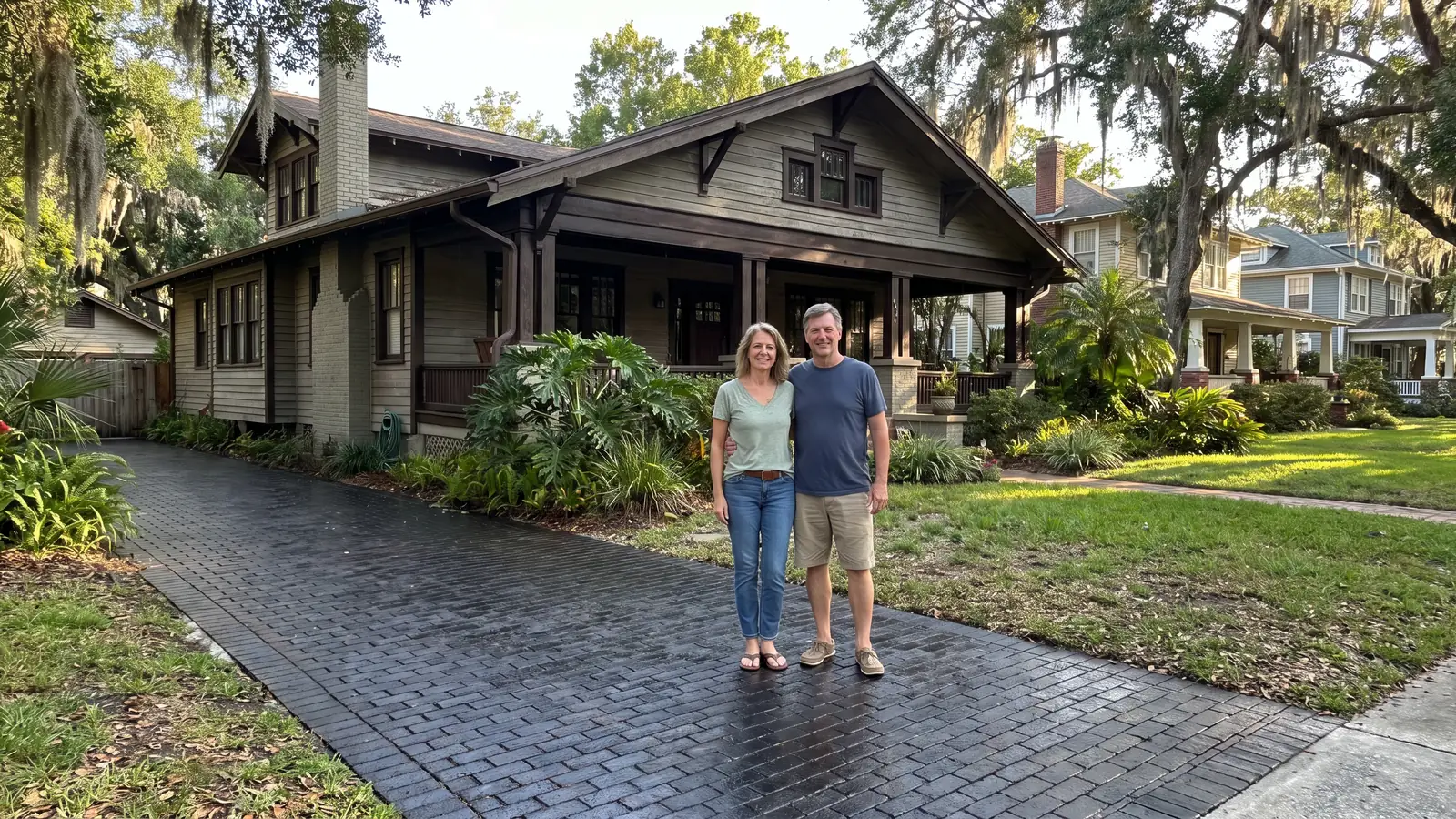
Paver sealing for San Jose homes
Paver Sealing in San Jose, FL
From Via de la Reina to the river, San Jose pavers can get a free sealing estimate by calling (904) 543-3876.
- Brings out deeper paver color
- Fresh joint sand helps lock pavers in place
- Gives weeds less room to grow
- Makes the surface easier to keep clean
- Free estimate, no obligation
Request a Free Estimate
Free, no obligation.
Fast, careful paver sealing in San Jose
Paver sealing is available in San Jose, from the Spanish-style streets near Via de la Reina to ranch homes by the river. A local contractor cleans, re-sands and seals your courtyard, drive or walk after a free estimate. Once you call (904) 543-3876, a San Jose homeowner hears back within 1 business day, usually much sooner.
Warm-toned pavers beside stucco walls and oak shade look wonderful when they are clean. When they go gray, green and gappy, the whole entry feels tired. A wash, fresh sand and a fresh coat can bring the color back, and the contractor will explain each step. To start, book a free estimate and describe the surface.
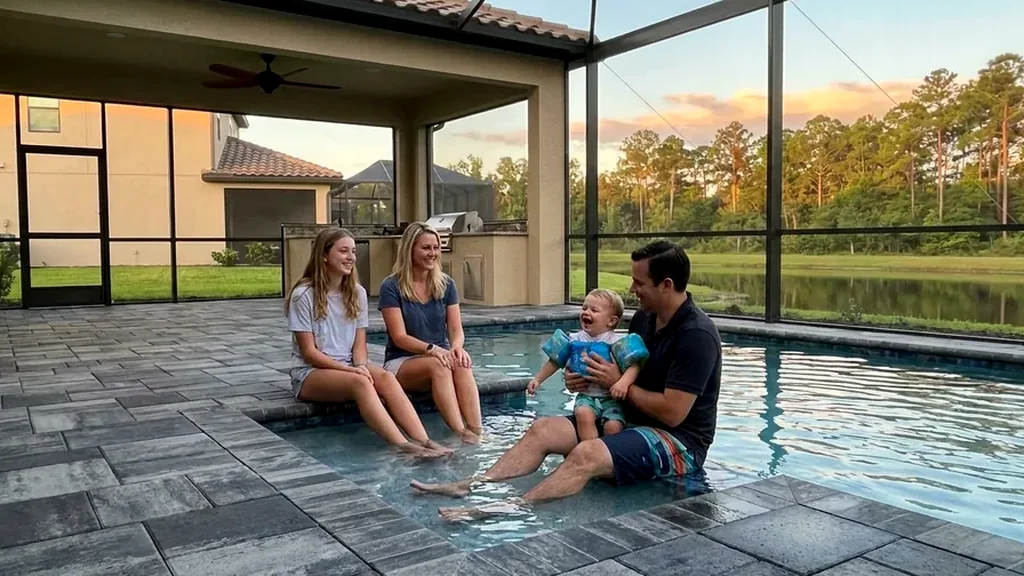
Why hire a local paver sealing contractor in San Jose?
San Jose mixes 1920s Spanish-style streets, post-war ranch blocks and gated riverfront pockets, so no two jobs start from the same place. A local contractor sizes each one up in person, and you can book a free estimate to begin.
A look at your own lot
Walk the courtyard with the contractor, hear the price and ask what you like. Hearing the number obligates you to nothing.
A range to compare with
Cleaning, sanding and sealing commonly lists at $1.75 to $3.25 per square foot in this region. Check any bid against that.
A finish that fits the house
A wet look deepens color beside warm stucco. Matte keeps a natural face near the pool or on a busy drive.
Gates and rules respected
Tell the contractor about a guard gate or an association early, so the visit fits the community's schedule.
Get Your Free Estimate in San Jose
Tell us about your pavers in San Jose.
Free, no obligation
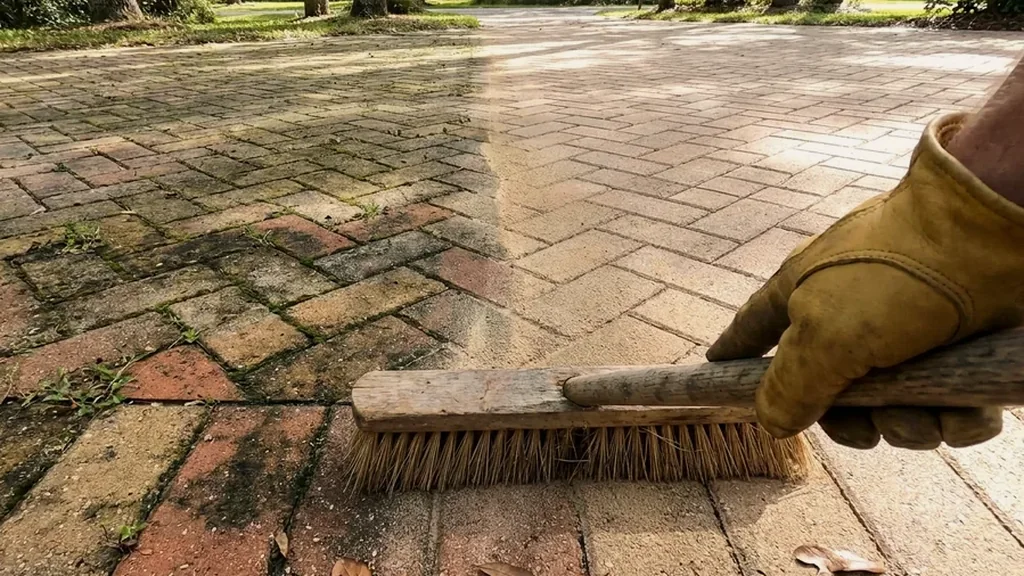
What paver problems show up most in San Jose?
Warm tones that go flat
San Jose homes run from Spanish Revival bungalows to midcentury ranches, and many of the older ones are Mediterranean in feel. Pavers beside warm stucco look best when their color stays rich. A wet look deepens color, while matte keeps the natural face. Think about which suits your walls before the contractor opens a can. A small test patch beside the front door shows the difference in minutes.
Heavy oak shade and moss
Wikipedia says most San Jose homes have lawns shaded by large oaks with draping moss. University of Florida notes live oaks spread 60 to 120 feet and never drop all their leaves, and water oak acorns stain concrete. Add the Royal Horticultural Society's point that algae grow faster in shady, damp spots, and a San Jose walkway greens up fast. A wash clears it, and a sealed surface gives the algae less to hold.
Moisture off the river
San Jose sits along the St. Johns, about 4.5 miles from downtown, and waterfront homes are common. River air keeps mornings humid, and shaded pavers can stay damp longer than the sky suggests, even after the lawn looks dry. Sealer needs a dry surface, so the contractor may wait a day or two. That patience prevents a cloudy coat, and the only price is a short delay.
Gated pockets and shared drives
Epping Forest, a 58-acre riverfront estate off San Jose Boulevard, became a gated community of about 90 homes and 80 condominiums. A Jacksonville paver page says a gate can cap the hours and vehicles a contractor may bring. Mention a guard gate, a visitor list or association rules when you ask for the estimate. A short heads-up avoids a wasted trip for everyone.
Sandy ground that lets joints drain
In USDA terms, the Ortega soil series, first described in Duval County, is fine sand over 80 inches deep that drains rapidly. That is county-level, but sand is the story under much of the area. Rain carries joint sand off unsealed pavers, so the joints open, and a summer cloudburst can do it in an afternoon. Fresh sand goes back in before any sealer, and it needs to be swept in fully so no pockets remain.
Do San Jose's Spanish-style streets and its post-war streets need different sealing?
Yes, because the two eras bring different houses, lots and finishes. San Jose began in 1925 as San Jose Estates, a planned community on 1,000 acres of the old plantation. Marsh and Saxelbye designed many of its Mediterranean Revival buildings, though only 37 structures stood when building stopped in 1926. Tell the contractor which era your house belongs to when you book a free estimate.
In 1947 Stockton, Whatley, Davin and Company bought most of the area and re-platted it, and post-war subdivisions filled in the rest. Midcentury ranch homes now sit beside the 1920s houses, and Wikipedia notes homes from million-dollar waterfront mansions to small wood-frame starters. That range means pavers of every age, so call (904) 543-3876 and describe yours.
Some San Jose pockets are gated. Epping Forest became a gated community of about 90 homes and 80 condominiums, and Wikipedia says the area includes gated communities and planned developments. Gates and association rules can limit when a contractor may work, so mention them when you book a free estimate.
What does paver sealing cost in San Jose?
A clean, sand and seal is commonly published at $1.75 to $3.25 per square foot around here. In San Jose, a long entry court or a riverside deck adds area, and area drives the total. Failed old sealer must come off first, and sand lost to storms must be put back. To see where your pavers fall, book a free estimate.
Access and shade matter as much as size. Locked gates, stairs and tight side yards add prep time, and heavy oak shade adds cleaning. Small jobs can run into a minimum size. Call (904) 543-3876 and the contractor can say which of these will touch your San Jose quote before anyone starts.
| Paved area | Typical example | Clean, sand and seal |
|---|---|---|
| 300 sq ft | Small patio or walkway | $525 to $975 |
| 600 sq ft | Two car driveway | $1,050 to $1,950 |
| 1,000 sq ft | Large driveway or pool deck | $1,750 to $3,250 |
| 1,500 sq ft | Driveway plus pool deck | $2,625 to $4,875 |
Math based on the $1.75 to $3.25 per square foot that Northeast Florida paver companies publish. Your contractor sets the actual price after seeing the surface. Repairs, leveling and stripping failed sealer are usually extra.
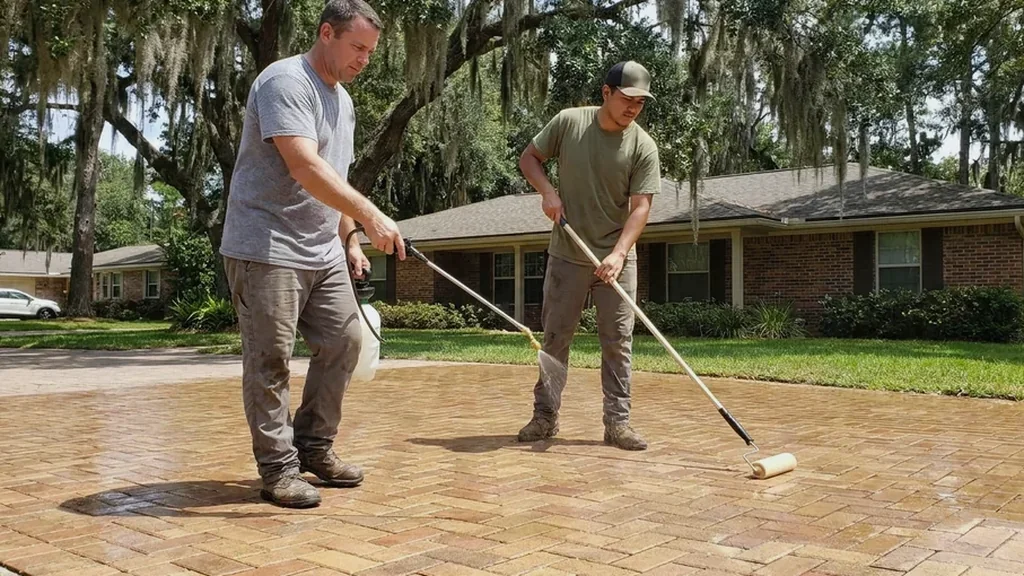
How does a paver sealing job work in San Jose?
Look the lot over
The contractor walks the courtyard, drive and walks of your San Jose home, noting shade, slope, gate rules and any earlier sealer. A dip or lifted paver is reset first, because sealing locks the surface in as it is. If a past owner left an unknown coat, a small test patch shows whether new sealer will bond, since water-based will not go over solvent-based. Ask about any association hours or rules for your street at this visit, so nothing surprises anyone later.
Wash gently near stucco and plants
Cleaning lifts the green film, oak stains and tire marks that build up under moss-draped oaks. Oil and rust spots are pre-treated, and a few deep stains may only lighten. Pressure stays moderate, because a Jacksonville company says harsh washing can erode the paver surface. Rinse water is kept off stucco, wood trim and shaded beds. Stubborn spots under the oaks may get a second pass, and the contractor tells you if a stain will only fade.
Sand the joints full
The wash takes joint sand with it, so new sand is swept into every joint. San Jose's sandy ground drains quickly, and a low joint invites soil and weeds. Full joints hold the pavers tight against each other. If you want joints that blend in, ask about colored sand, which some Jacksonville companies offer. The surface is swept more than once, so no sand pocket is left to wash away in the first storm.
Let river air clear
Mornings near the river can stay damp, and oak shade slows drying further. A Jacksonville page says to wait 24 to 48 hours after cleaning, and shaded San Jose pavers may need more. Sealing over moisture gives a milky coat, so the contractor holds off until the surface is truly dry. On a river lot, a call the evening before can confirm the day.
Spray, back-roll, record
Many pros spray the sealer and then back-roll it to even out coverage, and Trident Protects warns that sealer left to puddle can dry mottled. Walking is usually fine within hours, while cars need about a day. Keep the product name, since quotes from companies run two to five years between coats. For a wet look, a small test on a hidden corner shows how the color will read beside stucco.
Complete paver services in San Jose
San Jose jobs follow four stages: wash, new sand, dry time, sealer. The wash clears moss, tannin and dirt, and the sand goes in next. Sealer is last, so nothing dirty is trapped beneath it. For timing on your courtyard, drive or walk, call (904) 543-3876.
Courtyard pavers beside stucco walls, entry drives, pool decks and river-side patios each wear differently. Pool decks need grip, and gloss without an anti-slip additive is slippery when wet. Walkways under moss-draped oaks go green first. Tell the contractor which surfaces you have when you book a free estimate, and the estimate will cover each.
Any earlier coat narrows the choice, since water-based sealer cannot go over solvent-based. After that comes the finish: a wet look deepens color but scuffs show sooner, while matte is quieter. Ask the contractor to show both on a small test patch. Call (904) 543-3876 to set that up.
Summer storms in San Jose arrive fast and can leave pavers damp for a day or more under the oaks. November through April is the driest stretch. A contractor plans around your lot's shade and the forecast. To choose a day that works, book a free estimate.
Questions to ask before you hire
- What does the price cover if I only want the front walkway done?
- Can the job go ahead while I am at the office all day?
- Can you work in a narrow driveway or tight side yard without blocking the street?
- Can you clean and seal brick pavers that have been in the ground for decades?
- Do you seal the sides of the pavers where they meet my lawn and flower beds?
- How do you keep green algae from coming back in the shade beside my house?
- How do you confirm the pavers are dry all the way down before you apply sealer?
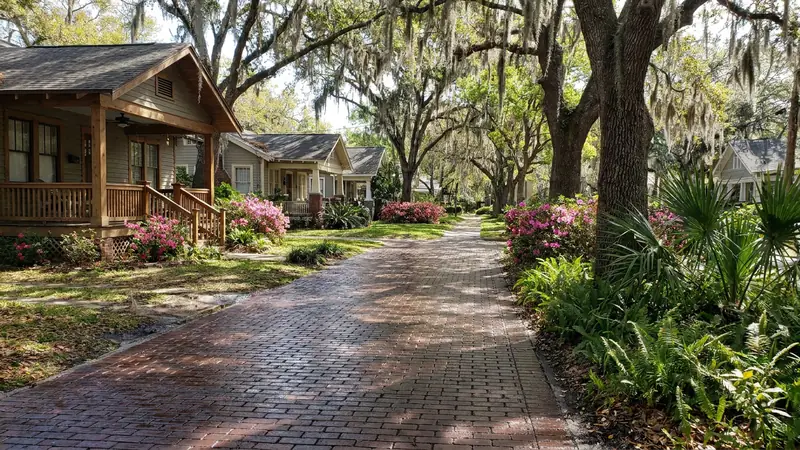
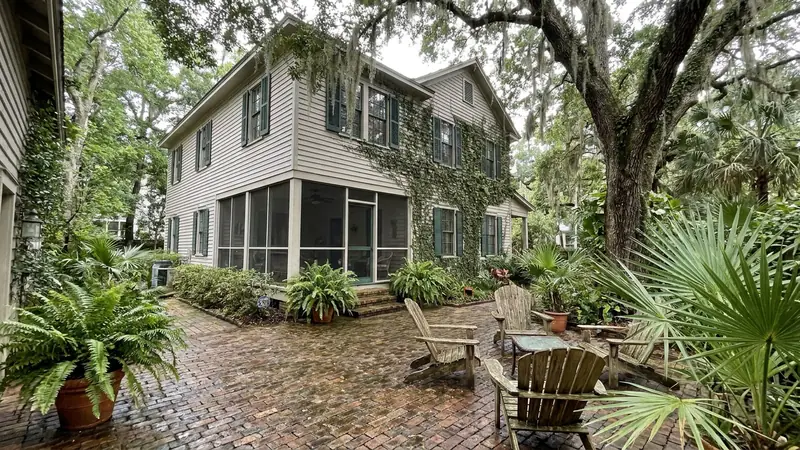
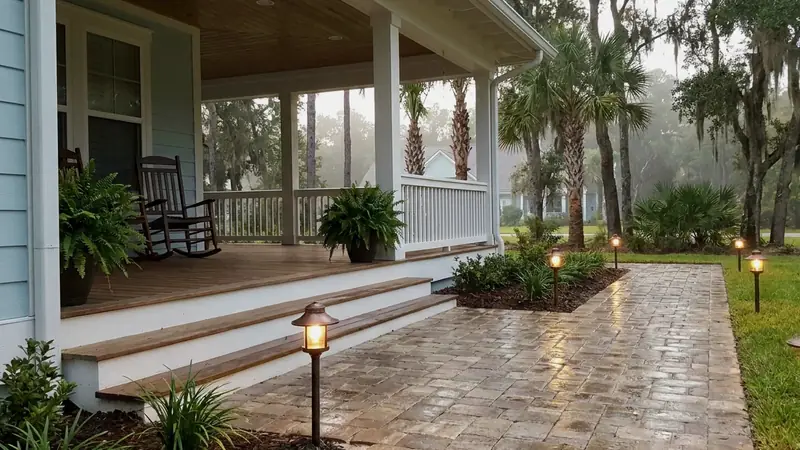
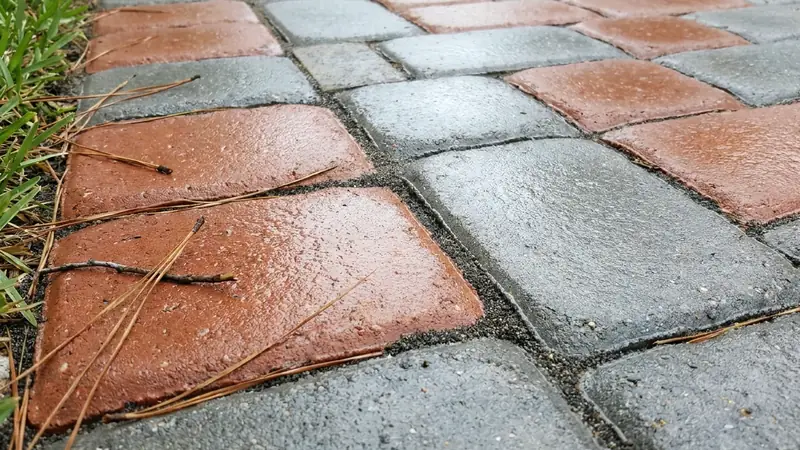
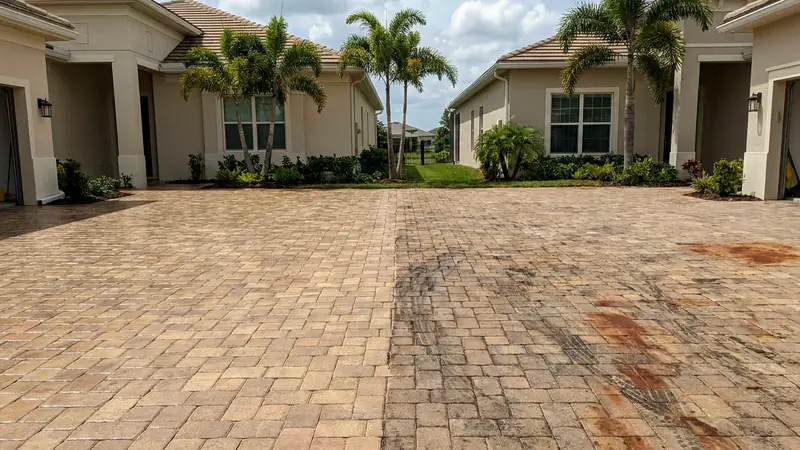
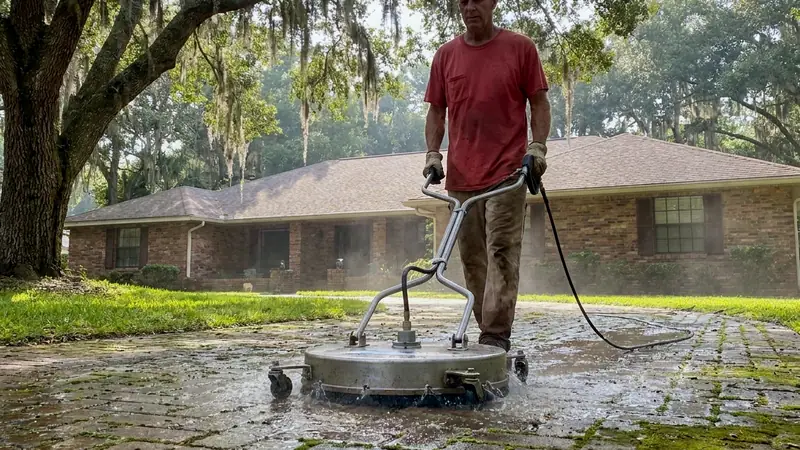
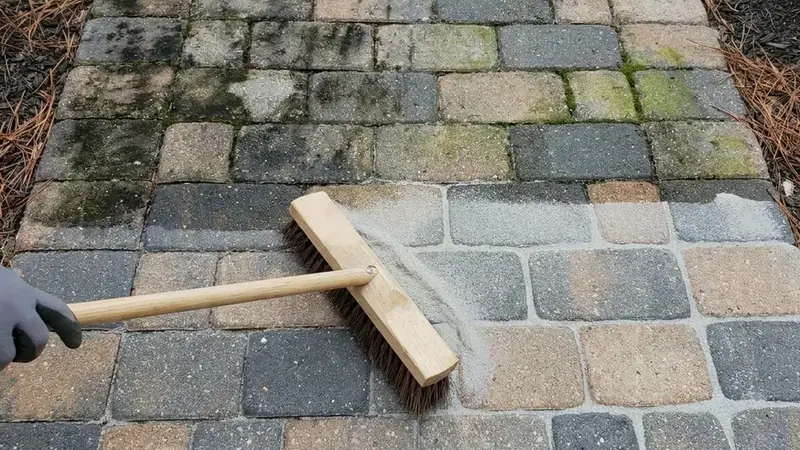
What do sealed pavers look like around San Jose?
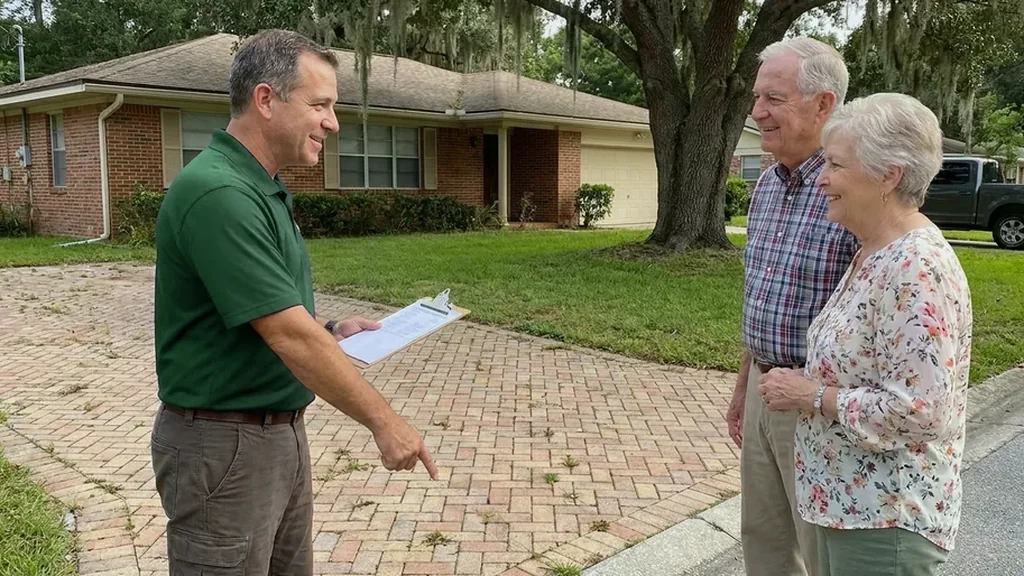
Why local matters in San Jose
A contractor who knows San Jose knows its streets differ: a courtyard near Via de la Reina asks for gentle rinsing near old stucco. A ranch drive off San Jose Boulevard may call for a heavier wash. Someone from outside the area may treat them the same. To talk with a contractor who works San Jose's mix of old and new streets, call (904) 543-3876.
Some San Jose lots may carry historic rules. Six houses on Via de la Reina went on the National Register in 1985, which is not the same as local review. Jacksonville requires a Certificate of Appropriateness for driveways in local historic districts and on local landmarks. Check the Land Development Map, then book a free estimate.
Local timing counts as well. Mornings by the river can be damp, and oak shade slows drying under the trees. A contractor who works here learns to read those conditions and to hold off until the pavers are truly dry. You can book a free estimate and ask how a day would be picked for your address.
Why do San Jose's streets look so different from the rest of Southside?
Because the planner John Nolen laid San Jose out in 1925 with streets named for Spanish cities. His plan called for paved sidewalks on every street, which was rare in suburban Florida then. Its first phase of lots was sold out by August 10, 1925, according to The Jaxson. Pavers fit that tradition of well-kept walks, so book a free estimate if yours need attention.
The San Jose Hotel opened on New Year's Day 1926 and became The Bolles School in 1933. One old entrance gate still stands on San Jose Boulevard, and the country club course fills the triangle where it meets Via de la Reina. Goodbys Creek Preserve sits along the creek that divides San Jose from Mandarin. If your street is near the old gate, the club course or the creek preserve, call (904) 543-3876.
Frequently Asked Questions
How much do people charge to seal pavers in San Jose?
The figure companies in this region publish is $1.75 to $3.25 per square foot for a full clean, sand and seal. Your San Jose number moves with area, shade, old sealer and lost sand. A gate or a tight court adds prep. Have the quote list the measured area, so you can check it against that range. Pool decks, courtyards and walks are measured along with the drive.
Is it good to seal pavers in San Jose?
Yes, in most cases. Oak shade, river air and sandy ground all work against bare pavers, and a sealed surface resists stains and holds its joint sand better. You do take on upkeep, since the coat wears out. Pavers under a roof or in deep shade need renewing less often than a sunny drive. Ask the contractor to look at the surface before you decide, since some pavers are sound enough to wait.
Is it better to spray or roll paver sealer?
Many pros do both. Trident Protects says spray and back roll is the recommended method for most sealers. A Jacksonville paver company says it gives even coverage and works the sealer into the joints. Ask the contractor how the coat will be applied, how puddles are avoided and how many coats are planned. Excess sealer left to dry can leave mottled patches.
How long do paver sealers last in San Jose?
Going by company quotes, a San Jose coat should last two to five years between renewals. Sun, tires and pool chemicals wear a coat faster, and shade is gentler. To check yours, wet a small area: beading is a good sign, and a dark, quick soak-in says it has worn out. Courtyards under a roof can last longer than open drives.
Do I need city approval to seal pavers in a San Jose historic district?
It depends on your address. The city asks for a Certificate of Appropriateness on exterior work in local historic districts and on local landmarks, and driveways are one named example. A National Register listing is a different thing. Enter your address in the city's Land Development Map, then ask staff before you book anyone. A short call now is easier than reversing work later. Keep the answer on file, since a later owner or the city may ask for it.
Will a wet look suit a Spanish Revival home in San Jose?
It can. A wet look deepens color, which suits warm pavers beside stucco. It shows scuffs sooner than matte, though, and can be slippery on pool decks without an anti-slip additive. Ask the contractor to test both on a small spot. Look at them in your own daylight, at the time of day you use the entry most. Pool decks usually call for a grip additive or a matte coat. Pool decks usually call for matte or a grip additive.
Can my San Jose gated community limit when pavers are sealed?
Yes. A Jacksonville paver page notes that a gate can cap the hours and vehicles a contractor may bring. HOA approval depends on the declaration. Share your gate rules, any quiet hours and any visitor-list steps when you request the estimate, so the visit is planned around them. Shared patios and common areas are usually the association's decision. Shared drives and common areas are usually the association's decision.
How soon after cleaning can pavers be sealed in San Jose?
Only once they are fully dry. One Jacksonville page puts that at 24 to 48 hours after cleaning, and shaded or river-side pavers may need longer. Most white, cloudy coats trace back to sealing damp pavers. A contractor may shift your date by a day or two to protect the finish.
Nearby areas we serve
Ready for a Free Estimate in San Jose?
Call (904) 543-3876 and tell us about your pavers.
Free, no obligation